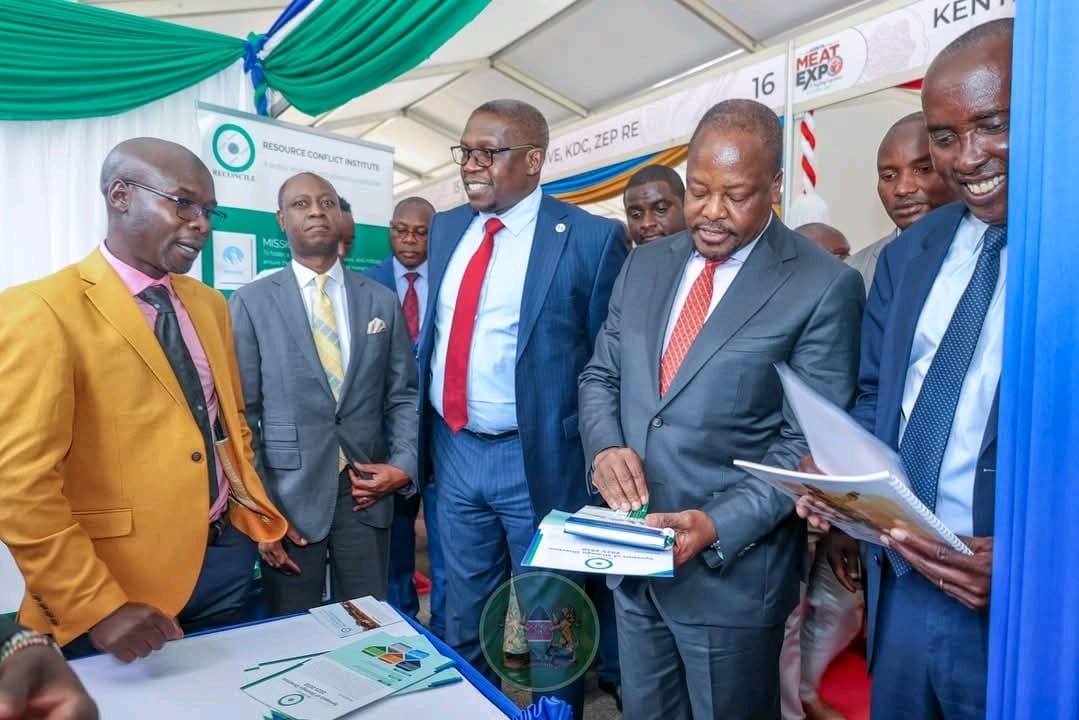
From left; Ken Otieno- Executive Director RECONCILE, Jonathan Mueke- Principal Secretary for State Department for Livestock Development, George Odundo- Group Managing Director and Chief Executive Officer (CEO) of Nation Media Group (NMG), Mutahi Kagwe- Cabinet Secretary for Agriculture and Livestock Development, and Joseph Ole Lenku- Governor of Kajiado County during a visit to RECONCILE’s booth on 6th August 2025 at the KICC during the Meat EXPO (Photo courtesy Ministry of Agriculture and Livestock Development)
From 6th to 8th August 2025, the iconic Kenyatta International Convention Centre (KICC) played host to the Kenya Meat Expo 2025, a landmark gathering that brought together stakeholders across the livestock value chain. Organized by the Nation Media Group, the event drew over 27,000 footfalls and featured 80 exhibitors, each showcasing innovations, services, and ideas aimed at transforming Kenya’s livestock sector into a more sustainable, competitive, and resilient industry.

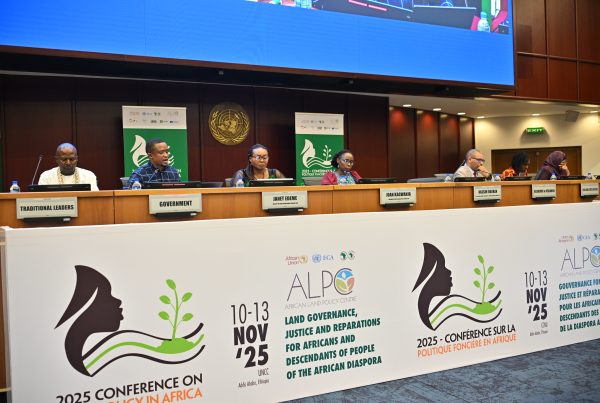
The official opening of the Meat EXPO by the chief guests (Photo courtesy Ministry of Agriculture and Livestock Development)
The Expo served as a melting pot of farmers, processors, traders, policymakers, researchers, development partners, and technology providers, united by the shared vision of building bankable and sustainable livestock enterprises. The theme resonated strongly with RECONCILE’s mission, making the event a strategic platform to amplify its advocacy for climate-smart livestock production.
RECONCILE’s Role: Driving the Climate-Smart Agenda
Supported by its partners namely; The Christensen Fund, Misereor, and the Home Planet Fund to take part in the EXPO, RECONCILE brought to the Expo its deep expertise in rangeland governance, land rights, and policy advocacy. In its masterclass, “Climate-Smart Livestock and a Sustainable Future,” RECONCILE made a compelling case for rethinking how livestock production systems are managed in the face of climate change, environmental degradation, and socio-economic challenges.
At the heart of RECONCILE’s message was the need for a systems-based approach- one that integrates ecological health, social well-being, economic viability, and cultural values. By focusing on security of tenure, strengthening of livestock-related policies and laws, and advancing Participatory Rangeland Management (PRM), RECONCILE highlighted that sustainable production cannot be achieved in isolation. It requires a holistic model where land governance, resource management, and livestock improvement go hand in hand.
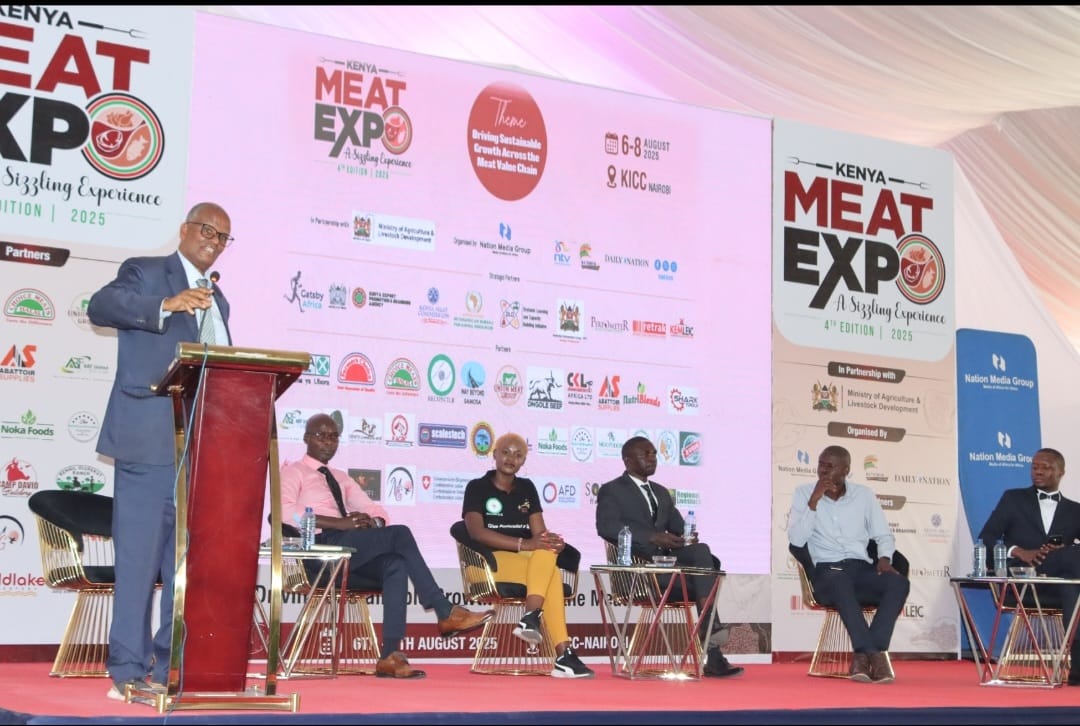
Professor Jesse Njoka (standing) leading the masterclass session on “Climate-Smart Livestock and a Sustainable Future” together with the RECONCILE team
Building Producer Resilience Through Systems Thinking
RECONCILE’s Executive Director, Ken Otieno, underscored the urgency of adopting a systems-based approach in rangeland areas. This message was especially timely for pastoralist communities in Kenya’s arid and semi-arid lands, where resource scarcity and climate pressures often exacerbate competition and tension. By advocating for policy frameworks that secure community land rights and integrated rangeland management plans, RECONCILE positioned itself as a thought leader in linking livestock productivity with conflict prevention and social cohesion.
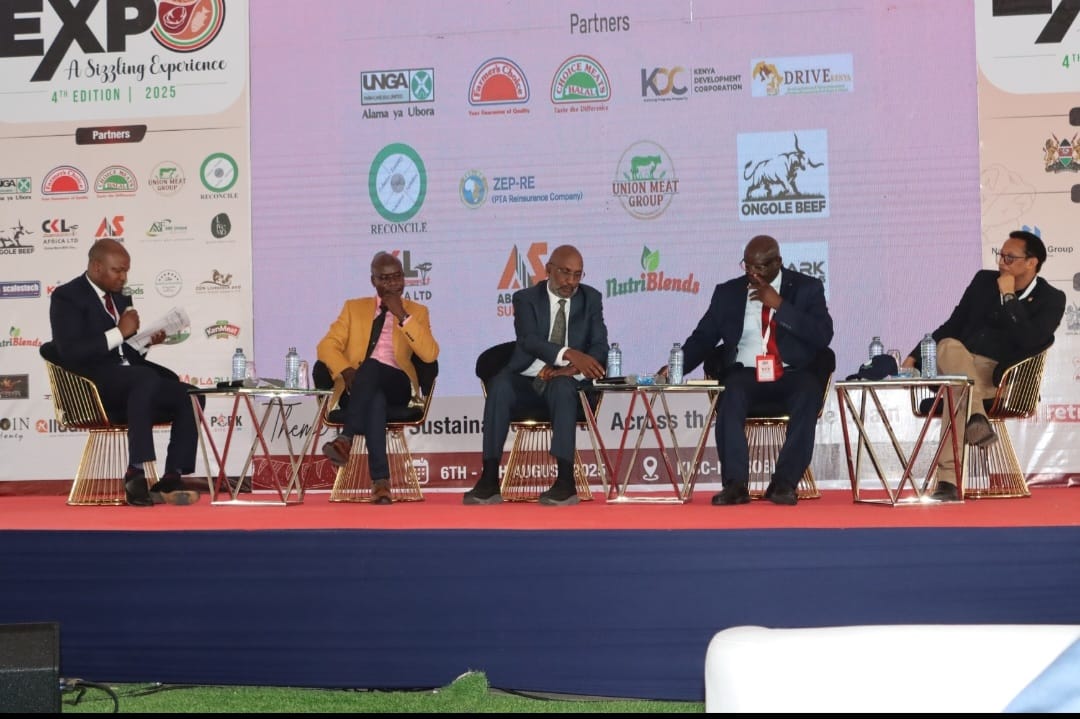
Ken Otieno (second from left), RECONCILE’s Executive Director, taking part in the panel discussion on “Driving Sustainable Growth Across the Meat Value Chain”
Participatory Rangeland Management and Breed Improvement
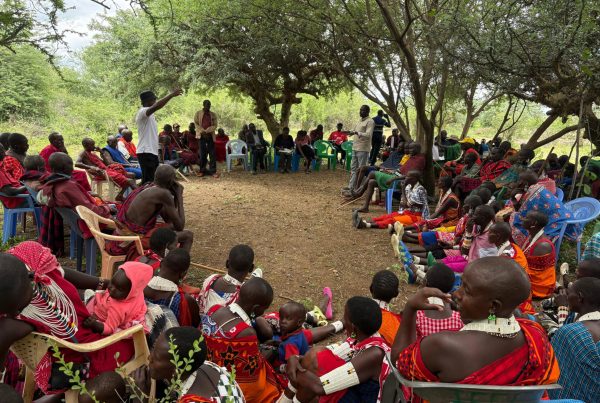
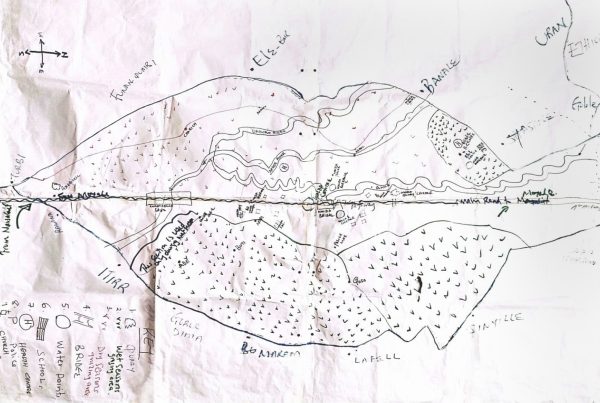
Central to RECONCILE’s advocacy was Participatory Rangeland Management (PRM), a process that places communities at the heart of decision-making about land and resource use. Through PRM, grazing plans can be tailored to local ecological realities, ensuring sustainable forage availability, improved livestock health, and reduced environmental degradation.
In addition, RECONCILE promoted breed improvement strategies that balance productivity with resilience. By selecting and breeding livestock better adapted to local conditions, whether in heat tolerance, disease resistance, or feed efficiency—producers can maintain profitability without compromising ecological sustainability.
Collaboration for Sector Transformation
The Expo featured seven masterclasses, each tackling a unique aspect of the meat value chain, from market access and trade facilitation by KEPROBA to beef finishing strategies by Gatsby Africa, and feed innovations by AU-IBAR. RECONCILE’s masterclass stood out for its emphasis on policy and governance, the elements that are often overlooked in technical discussions but critical for long-term transformation.
Beyond the sessions, RECONCILE’s exhibition booth was a hub of engagement for policymakers, community leaders, and fellow exhibitors. Conversations revolved around what RECONCILE does in the various areas of its programs and projects, how climate-smart practices can be mainstreamed into livestock production policies, and how multi-stakeholder collaboration can accelerate this shift.
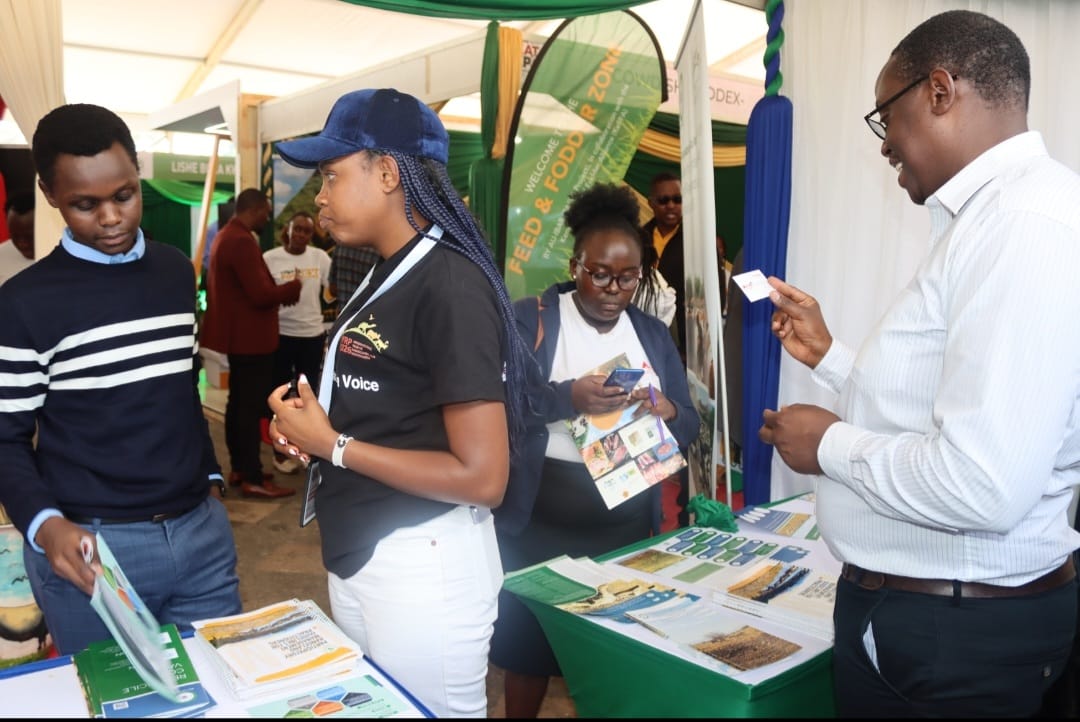
RECONCILE’s staff members engaging with Meat Expo delegates at the RECONCILE Booth
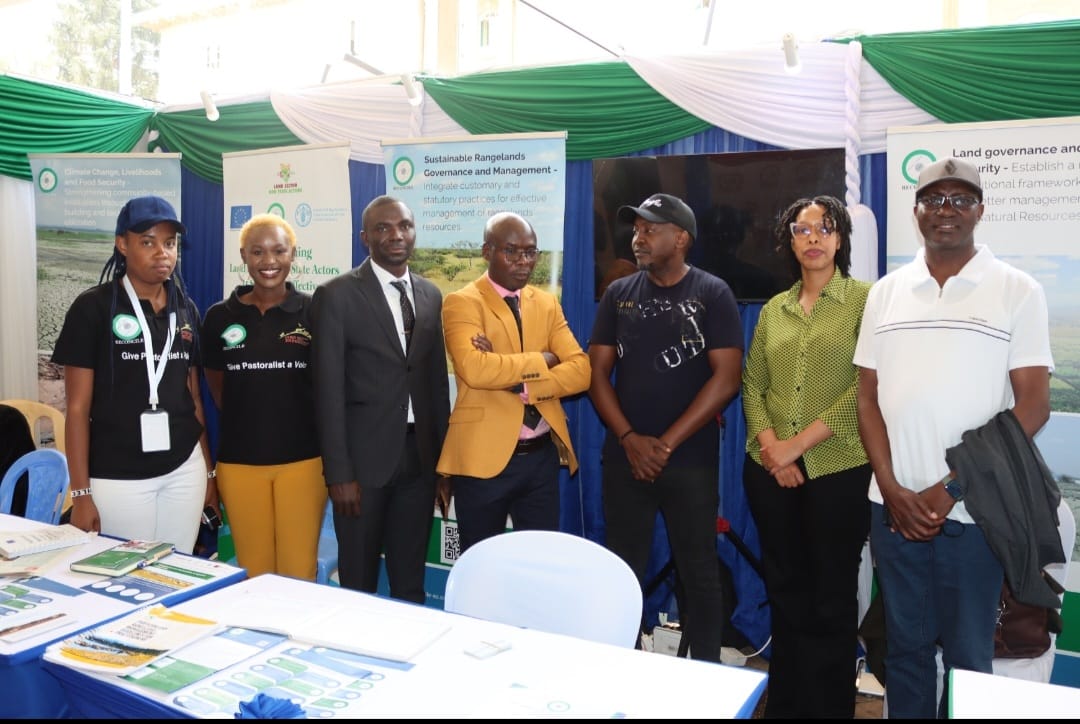
Members of RECONCILE’s community of practice (first three from right) during the visit to the RECONCILE booth at the Meat Expo.
Looking Ahead: Scaling Impact Beyond the Expo
The Kenya Meat Expo 2025 was more than a showcase. It was a call to action. For RECONCILE, the event reaffirmed that climate-smart livestock production is not a trend but a necessity. Building sustainable livestock systems requires coordinated action:
- Securing land tenure to give communities the confidence to invest in long-term stewardship.
- Strengthening policies and laws to ensure that climate adaptation is embedded in livestock governance.
- Integrating PRM and breed improvement into both policy and practice.
- Promoting systems thinking that links productivity, resilience, peace, and ecological health.
As the livestock sector grapples with climate change, market volatility, and shifting consumer expectations, RECONCILE’s message at the Kenya Meat Expo was clear: the future of meat production in Kenya must be sustainable, inclusive, and climate-smart.
By continuing to work alongside communities, policymakers, and development partners, RECONCILE together with its partners aims to translate the momentum from the Expo into practical action, ensuring that Kenya’s rangelands remain productive, peaceful, and resilient for generations to come.
By Allan Akivaga, Head of Policy and Advocacy at RECONCILE