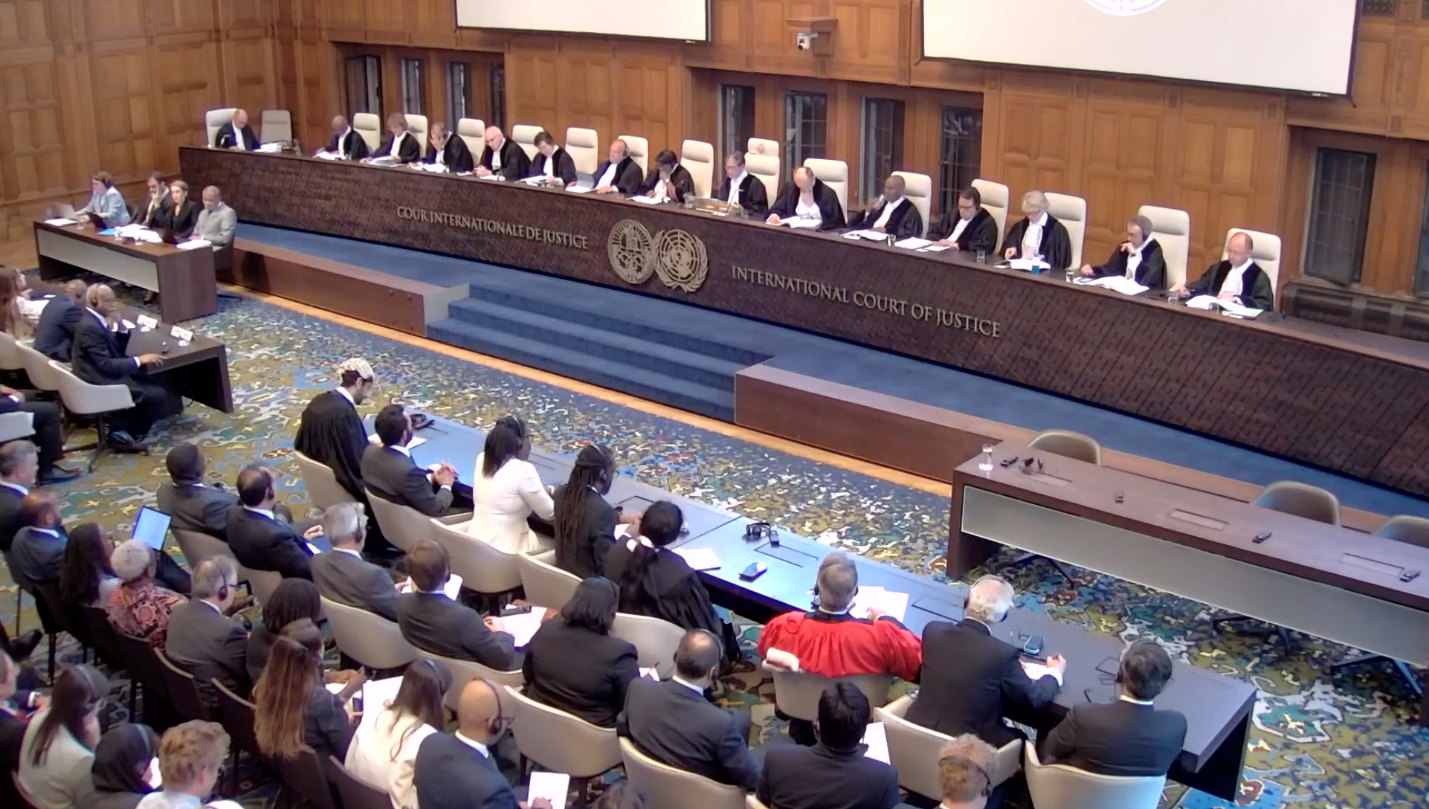
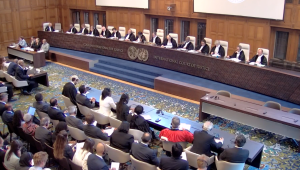
 Judges of the ICJ Gather to deliver the climate change advisory opinion
On 23 July 2025, the International Court of Justice (ICJ) issued a landmark advisory opinion that may transform how nations, institutions, and citizens address the climate crisis. While not legally binding, this opinion carries immense legal, moral, and political weight. It affirms what many frontline communities, youth movements, and small island states have long argued: climate change is not just an environmental or economic issue, it is a matter of international law and human rights.
This groundbreaking opinion came in response to a request spearheaded by Vanuatu and championed by the youth-led Pacific Island Students Fighting Climate Change. Their call to action was joined by more than 130 UN member states and a growing chorus of civil society actors, many of them from the Global South. Their message was simple and urgent: states must be held accountable when their climate inaction harms people and the planet.
The ICJ agreed. In its opinion, the Court declared that states have legal obligations, derived from both treaties like the Paris Agreement and customary international law to take concrete, effective measures to combat climate change. These obligations include reducing greenhouse gas emissions, safeguarding ecosystems, and preventing harm that crosses national borders. Significantly, the Court emphasized that environmental degradation threatens the enjoyment of fundamental human rights such as the rights to life, health, water, food, and adequate housing.
The ruling goes further; where a state’s failure to act causes identifiable harm, that state may be committing an internationally wrongful act. In such cases, legal consequences may include stopping harmful activities, preventing future violations, and providing full reparations, whether through compensation, restoration, or public acknowledgment. This opens the door to a new wave of legal strategies to hold major polluters accountable, especially by vulnerable communities and nations bearing the brunt of climate impacts.
What it means for Africa
For Africa, this ruling comes not a moment too soon. The continent contributes barely 4% of global greenhouse gas emissions, yet it faces some of the most devastating impacts of climate change. Floods in Mozambique, droughts in the Horn of Africa, the drying of Lake Chad, and rising temperatures across the Sahel are already displacing millions, threatening food systems, and undermining development. Africa’s courts, including in Kenya and South Africa, have increasingly recognized environmental rights, but the ICJ opinion now strengthens their hand with international legal backing.
The advisory opinion gives African governments, civil society groups, and legal advocates a powerful new tool. It can be used to push for increased climate finance, debt restructuring tied to climate investments, and stronger enforcement of existing environmental laws. It also bolsters the case for fully operationalizing the Loss and Damage Fund and gives African negotiators additional leverage in global forums such as COP 30 and the UN General Assembly.
Equally, the ICJ ruling validates the work of African youth movements that have been fighting for climate justice in courtrooms, classrooms, and streets. Their efforts, like those of their counterparts in Vanuatu, are no longer dismissed as idealistic. They are now firmly situated within the evolving architecture of international law.
The ICJ opinion further signals to governments, corporations, and multilateral institutions that climate irresponsibility is not just a policy failure, it may be a legal violation. It elevates climate justice from political aspiration to legal expectation. And it reinforces the principle that climate change is a human rights issue, especially for communities who did the least to cause it.
The road ahead is still long. But thanks to the courage of Vanuatu and the resilience of youth movements worldwide, the world now has a compass. Africa must use it, not just as a shield against climate injustice, but as a beacon for equitable and enforceable global climate action. Indeed, while the opinion doesn’t guarantee justice, it opens the door for those determined to pursue it.
Allan Akivaga is the Head of Policy and Advocacy at RECONCILE