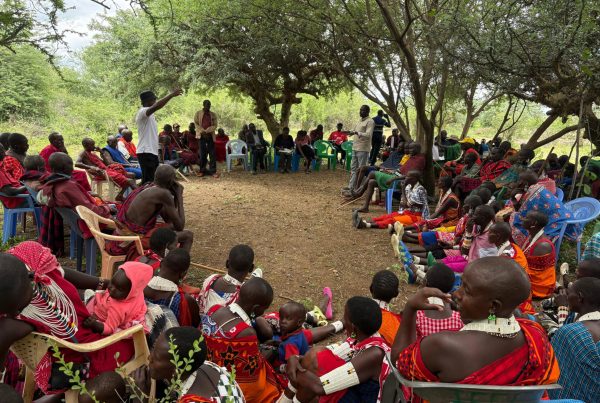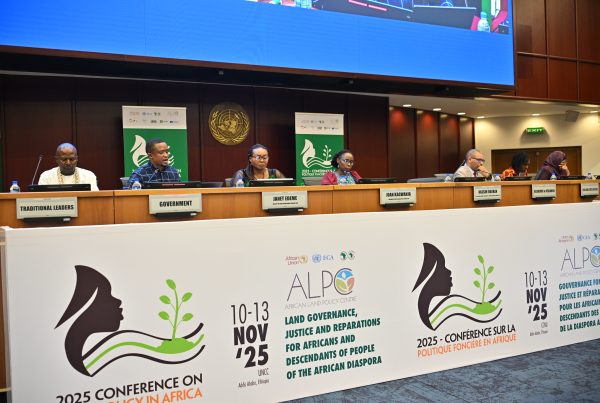
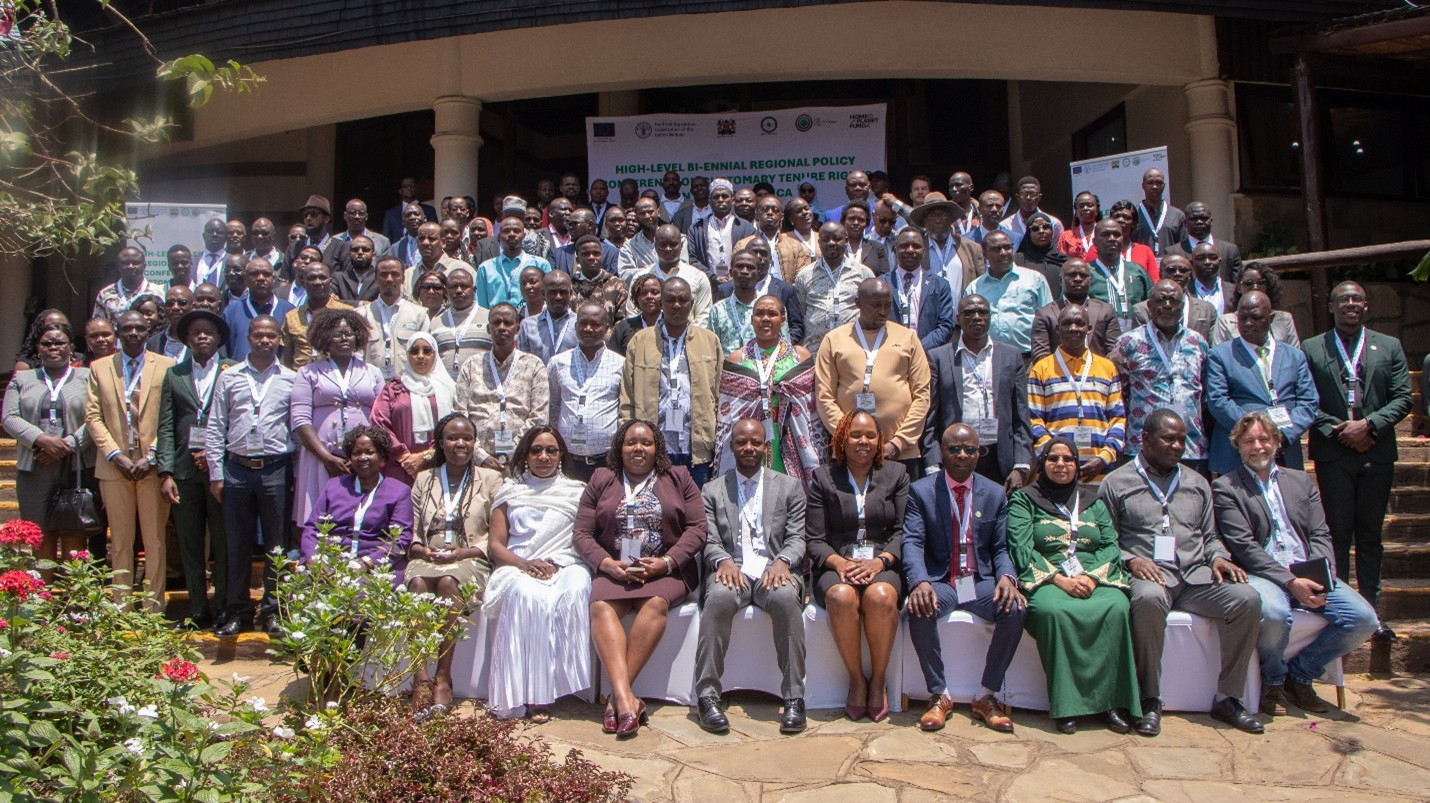
Participants during the Second Biennial High-Level Regional Policy Conference on Customary Tenure Rights in Eastern Africa, held at Safari Park Hotel, Nairobi (September 29–October 1, 2025).
The Second Biennial High-Level Regional Policy Conference on Customary Tenure Rights in Eastern Africa concluded at the Safari Park Hotel in Nairobi on 1st October 2025 with a renewed regional commitment to secure the rights of pastoralist and rangeland communities, strengthen customary land governance systems, and accelerate inclusive policy implementation across the Horn and Eastern Africa.
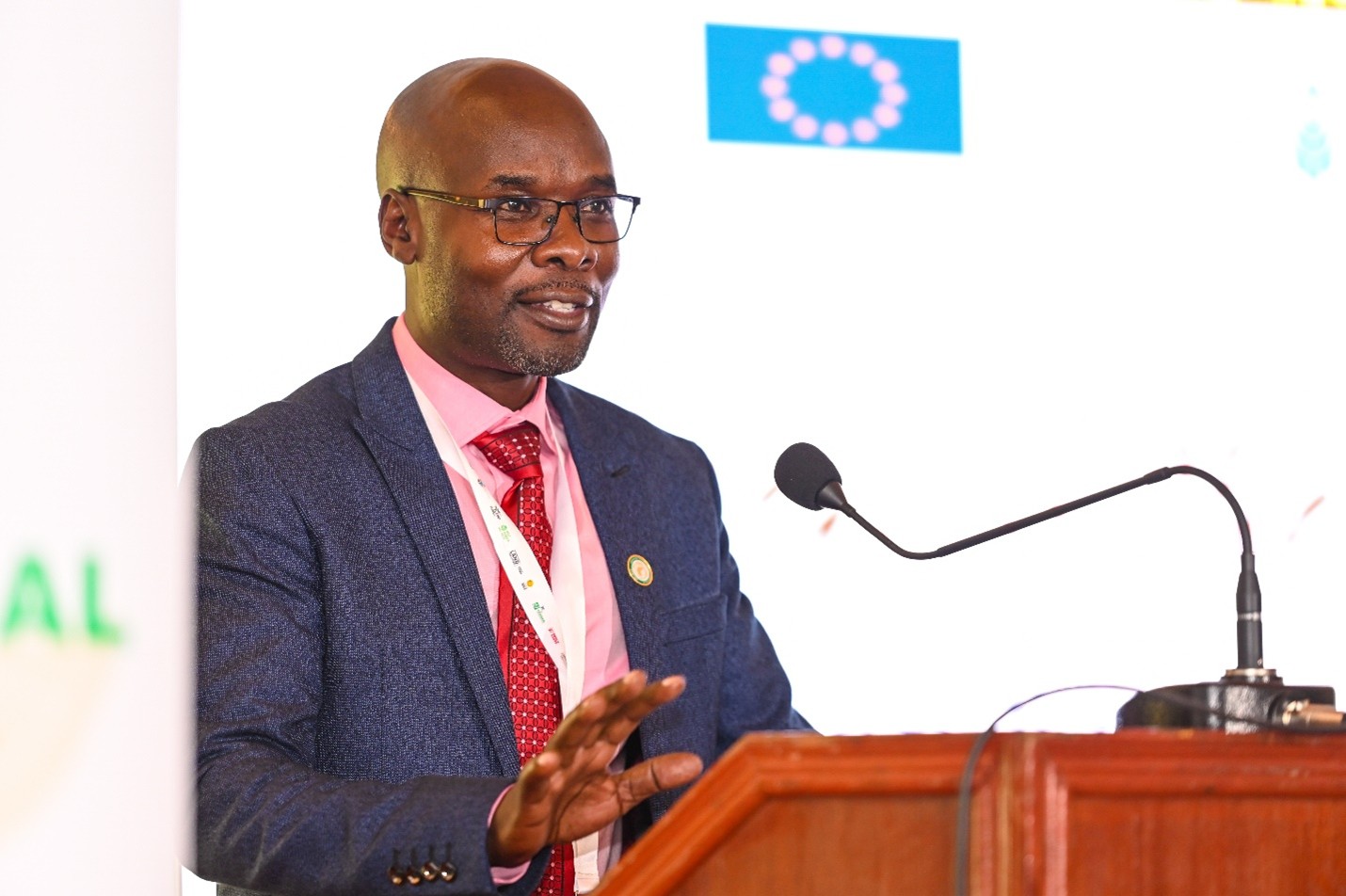
Ken Otieno, Executive Director RECONCILE, giving his opening remarks during the opening session of the conference
Convened by the Food and Agriculture Organization of the United Nations (FAO), the Home Planet Fund (HPF), the Christensen Fund, and the Resource Conflict Institute (RECONCILE), in collaboration with Mercy Corps, Welthungerhilfe (WHH), the International Land Coalition (ILC), Tembea Futures Institute, and International Alert, the three-day conference brought together over 150 delegates from governments, regional bodies, civil society organizations, academia, the private sector, and community institutions across Kenya, Uganda, Tanzania, Ethiopia, South Sudan, and beyond.
Held under the theme “Rangelands and Pastoralism: The Role of Policy, Research, and Learning,” the conference built on the outcomes of the 2023 inaugural event, which had emphasized the need to translate policy reforms into real protections for communities living under customary tenure systems. The 2025 edition advanced that dialogue by deepening reflection on policy coherence, strengthening research linkages, and fostering regional collaboration ahead of the International Year of Rangelands and Pastoralists (IYRP) 2026.
Reaffirming the Value of Pastoralism and Customary Tenure Systems
Across plenary and breakout sessions, participants reaffirmed that pastoralism is not a relic of the past but a vital and adaptive livelihood system that has sustained communities and ecosystems for centuries. The discussions recognized pastoralism as a cornerstone of climate resilience and food security, particularly in the arid and semi-arid lands (ASALs) that dominate much of Eastern Africa.
Delegates agreed that customary tenure systems underpin these livelihoods, providing a framework for managing shared rangelands, maintaining social cohesion, and enabling sustainable mobility. However, these systems remain inadequately recognized in statutory law and vulnerable to fragmentation by competing land uses, privatization, and resource-based conflicts.
Speakers urged governments to affirm customary institutions as legitimate governance structures, allocate funding for their strengthening, and develop clear legal mechanisms for collective land registration and boundary definition.
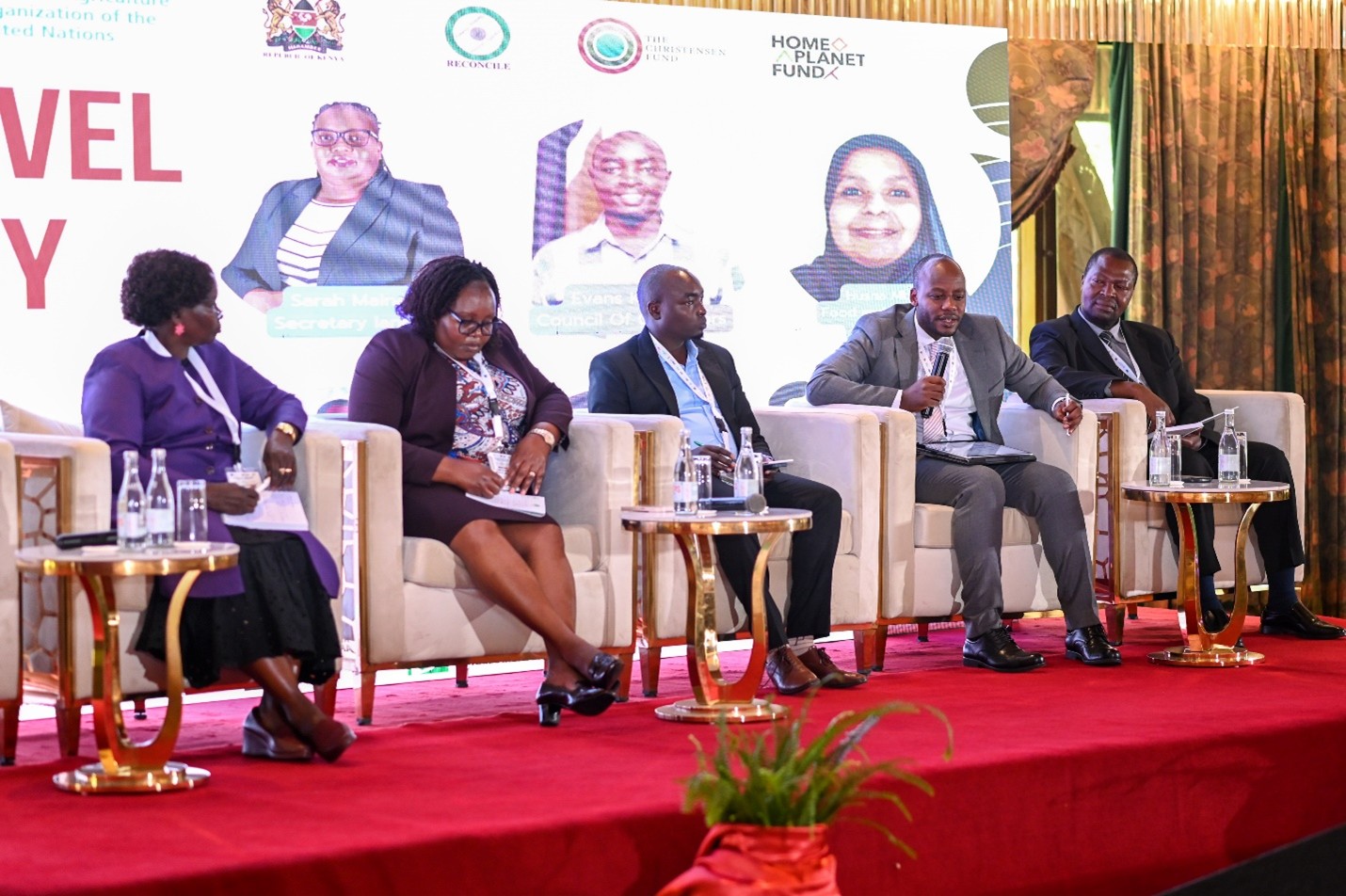
High level plenary discussion on rangelands, pastoralism and sustainable land use and land tenure, conflict and governance
Bridging the Policy–Practice Gap
One of the clearest outcomes of the conference was the recognition that progressive policies exist across Eastern Africa, but implementation lags far behind. While countries such as Kenya, Uganda, and Tanzania have advanced land reform agendas, insufficient coordination, limited political commitment, and underfunded institutions have slowed progress in securing communal tenure.
Participants emphasized that bridging this policy–practice gap requires multi-level collaboration, bringing together governments, civil society, and communities to co-create solutions that are grounded in local realities. They called for greater alignment of national frameworks with regional commitments such as the IGAD Transhumance Protocol, the African Union Policy Framework on Pastoralism, and the Voluntary Guidelines on the Responsible Governance of Tenure (VGGTs).
Several speakers also highlighted the role of counties and local governments as critical agents of change, advocating for devolution of land governance responsibilities alongside increased technical and financial support.
Harnessing Data, Research, and Indigenous Knowledge
The role of data, innovation, and knowledge exchange emerged as a major theme. Participants underscored that credible, participatory data is essential for evidence-based policymaking, advocacy, and resource allocation.
The conference showcased ongoing initiatives in digital land mapping, participatory rangeland monitoring, and transboundary resource tracking. However, delegates noted that data systems often remain fragmented or inaccessible to communities. They therefore called for the establishment of open-access platforms, led by regional institutions, to harmonize and share data that informs cross-border planning and conflict prevention.
Equally emphasized was the importance of Indigenous Knowledge Systems (IKS) in shaping adaptive land management. Traditional knowledge on mobility patterns, grazing cycles, and drought management was recognized as complementary to scientific research. Integrating these systems, participants agreed, is key to designing early warning systems and natural resource governance models that are contextually relevant and sustainable.
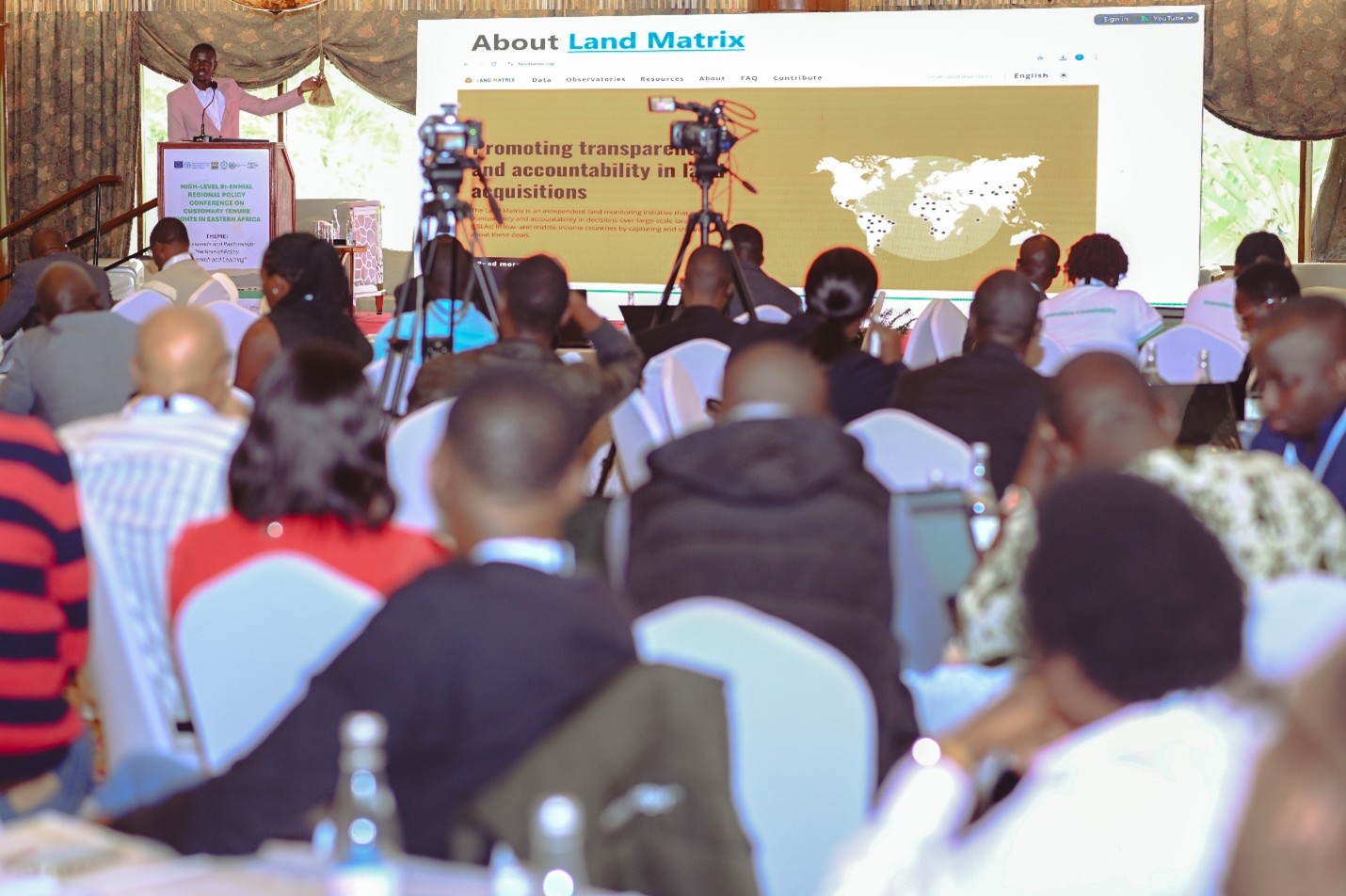
Pascal Adongo, RECONCILE, doing a Presentation on the role of Data and technology in tenure security and land governance
Championing Inclusive and Accountable Governance
Gender equality and youth inclusion were at the heart of conference deliberations. Participants stressed that women and youth are essential to the future of pastoralist governance, yet continue to face systemic exclusion from decision-making spaces and access to resources.
The conference called for gender-responsive budgeting, mentorship programs for emerging youth leaders, and representation of women in customary and statutory land governance institutions. Delegates noted that inclusive governance models, anchored in accountability, transparency, and intergenerational participation—strengthen not only social equity but also the legitimacy of land and resource management systems.
Additionally, the conference explored the intersection of tenure security and peacebuilding, recognizing that equitable access to land and resources remains fundamental to reducing conflict and displacement across pastoral territories.
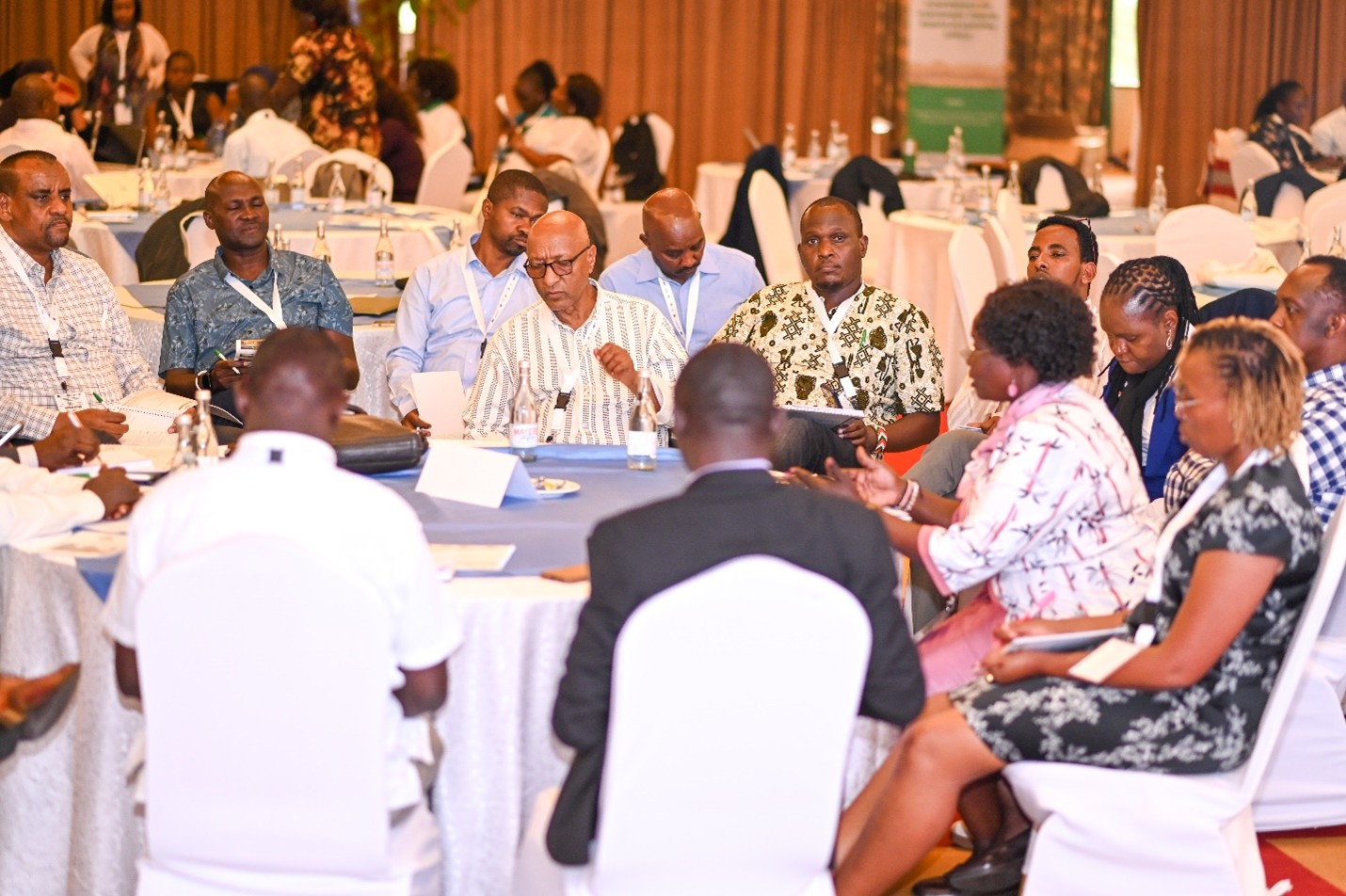
Participants engaging in a discussion during a breakout session on rangelands, pastoralism, and sustainable land use
Key Regional Commitments and the Road Ahead
At the close of the three-day convening, participants adopted a Joint Communique articulating actionable commitments to:
- Recognize and strengthen customary land governance systems through constitutional and legislative reforms.
- Accelerate domestication of regional and continental frameworks, including the IGAD Transhumance Protocol and the AU Policy Framework on Pastoralism.
- Integrate pastoral mobility and communal land use planning into national and county development strategies.
- Invest in participatory data systems, digital innovations, and community-led monitoring.
- Promote gender-responsive and youth-led governance models.
- Ensure responsible and inclusive investments that respect communal tenure and ecological integrity.
- Leverage IYRP 2026 to amplify advocacy and elevate pastoralism on global policy agendas.
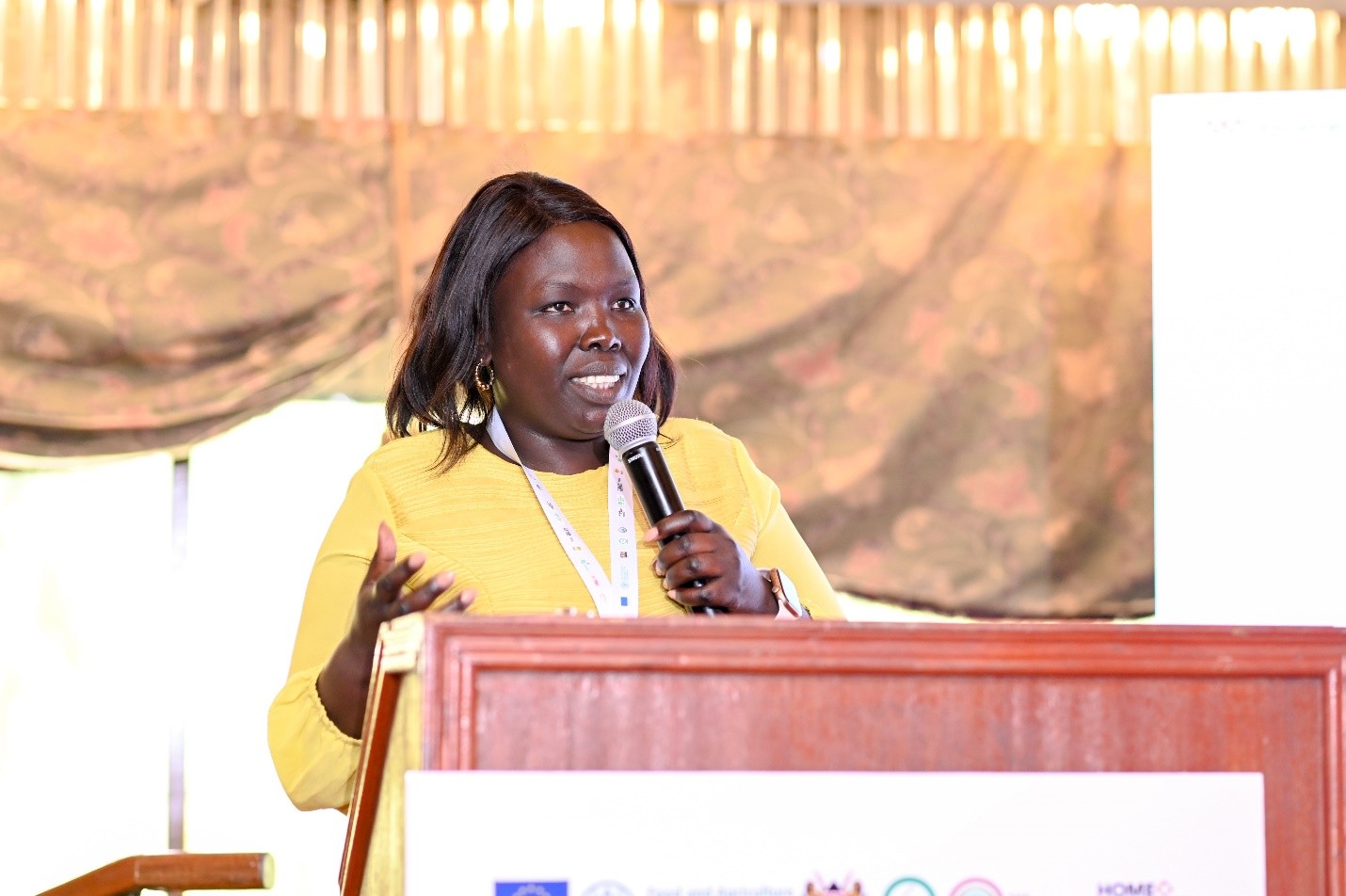
Dorina Prech, International Alert, leading participants in adopting the joint communique
A Shared Vision for the Future
As delegates departed Nairobi, one message resonated clearly: securing customary tenure rights is not merely a policy issue. It is a moral and developmental imperative. It is the foundation upon which peace, justice, and resilience must be built in the face of climate change, demographic pressures, and economic transformation.
The conference reaffirmed Eastern Africa’s collective determination to advance the pastoralist agenda through evidence-based policymaking, research collaboration, and inclusive dialogue.
RECONCILE and its partners pledged to sustain this momentum, to champion policy reforms, support community-led learning, and strengthen regional platforms that elevate the voices of pastoralists and rangeland stewards.
With IYRP 2026 on the horizon, the conference marked a defining moment in reaffirming that pastoralism is not a sector of the past, but a strategy for the future.
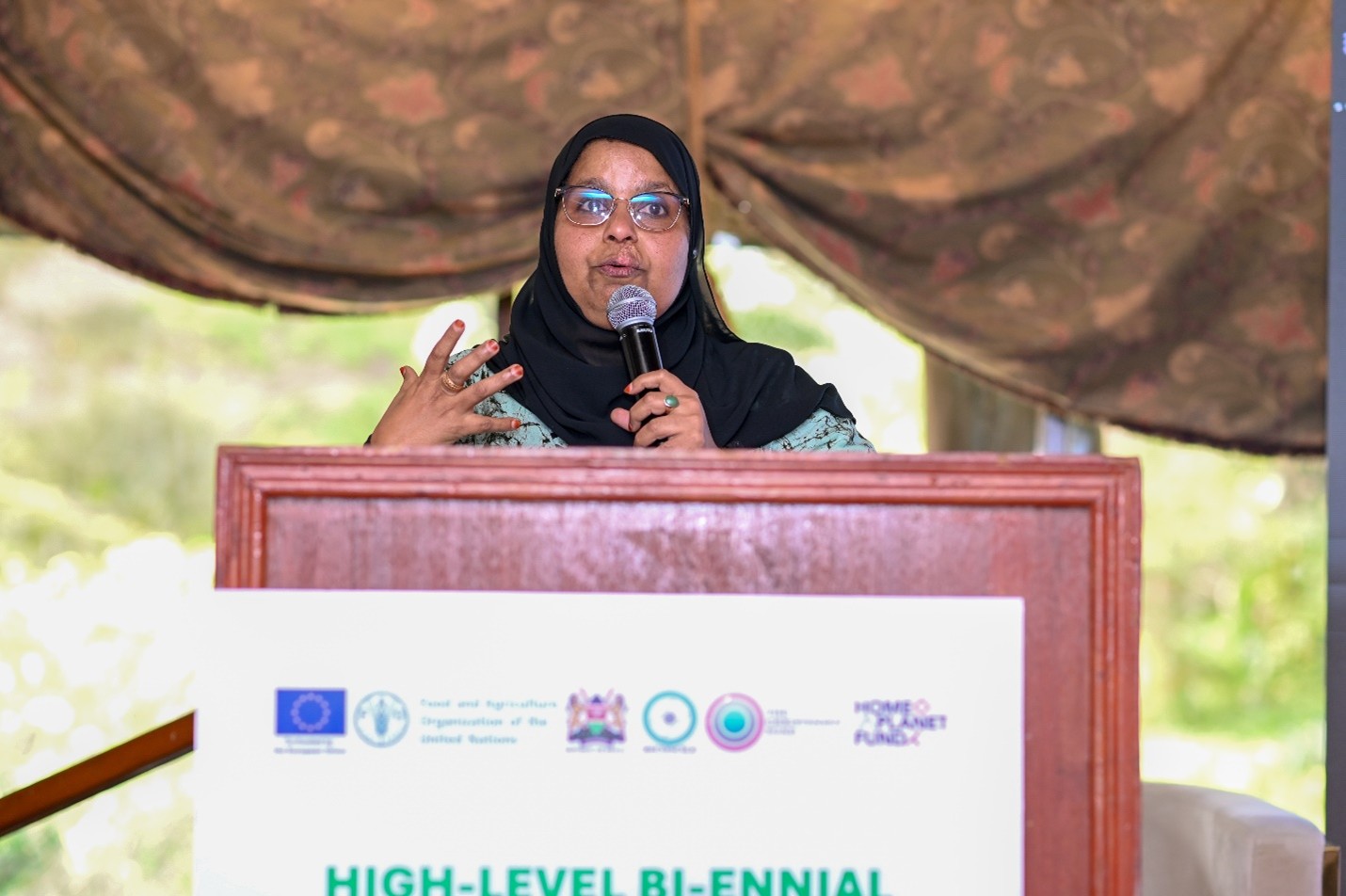
Husna Mbarak, FAO, giving her closing remarks at the closing ceremony of the conference
By Allan Akivaga, Head of Policy and Advocacy, RECONCILE