CLPA 2025: Confronting Africa’s Land Issues in a New Era
By Allan Akivaga, head of policy and Advocacy, RECONCILE
 Delegates gather at the African Hall in Addis Ababa for the official opening of the 2025 Conference on Land Policy in Africa (CLPA). Photo courtesy: CLPA.
The 2025 Conference on Land Policy in Africa (CLPA), held in Addis Ababa, brought together leaders, researchers, practitioners, and traditional authorities to take a sober look at the continent’s longstanding land questions. It was a meeting defined not by spectacle but by clarity. Land, as the discussions made clear, continues to be the stage on which Africa’s history and its modern pressures collide.
Under the theme “Land Governance, Justice and Reparations for Africans and Descendants of People of the African Diaspora,” the gathering approached a familiar subject with renewed seriousness. Land has long been the continent’s most enduring fault line. It holds memory, identity, livelihood, and power. In Addis, these realities were not treated as background noise; they were placed firmly at the center of the conversation, shaping deliberations that were striking for their directness and lack of euphemism.
The conversations in Addis had a reflective tone—grounded, unsentimental, and aware of the weight of history. In one session, Ken Otieno, the Executive Director RECONCILE, captured the core dilemma with disarming simplicity: “The struggle to deal with historical grievances under the new realities in the access, ownership and management of land is the tension between the need to hold on to the past and the demand to move forward.” It was a line that framed much of what the conference sought to untangle.
 Participants follow presentations during a main plenary session at CLPA Addis Ababa. Photo courtesy: CLPA.
The Weight of History
Much of the conference returned to a truth Africa has always known but rarely addresses directly: today’s land conflicts are built on yesterday’s architecture. Colonial land surveys, forced displacements, restrictions on movement, and the sidelining of customary authority created a governance structure misaligned from the start.
Customary institutions—family heads, elders, traditional custodians—once governed land through social legitimacy. Statutory systems later arrived with formal titles, written laws, new administrative units, and centralized authority. Instead of replacing one another, these systems were forced to coexist. The result, many decades later, is a dual structure that invites confusion: customary claims carry legitimacy but lack formal recognition, while statutory claims carry legality but often lack community acceptance.
This collision of worlds explains why land conflicts in Africa are rarely “new.” They are inherited disputes, reheated by political change, demographic pressure, expanding markets, and competing interpretations of ownership. The CLPA in Addis affirmed that no meaningful reform can happen unless the historical foundations of today’s grievances are acknowledged.
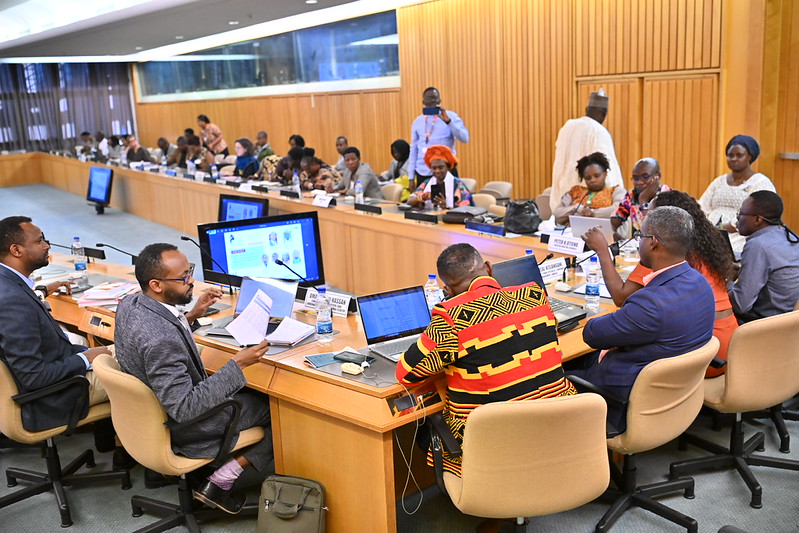 Participants engage in a side event where RECONCILE shared views on the Youth at the Forefront of Land Justice and Climate Resilience. Photo courtesy: CLPA.
Modern Pressures: Large-Scale Land Deals and Emerging ‘Green’ Acquisitions
If history laid the foundations of conflict, contemporary pressures have exposed and widened the cracks. In Addis Ababa, RECONCILE engaged deeply with the rising wave of Large-Scale Land Acquisitions (LSLAs)—agricultural, infrastructural, conservation-driven, and increasingly, climate-related.
Evidence presented by RECONCILE from the Land Matrix Initiative, an independent global land monitoring project where RECONCILE serves as the regional focal point for Africa, revealed several unsettling trends drawn from the 2025 analytical report on land-based offset projects:
- Africa remains the global epicenter of land-related conflict, with more than half of recorded disputes linked to agricultural land acquisitions.
- Communities are frequently displaced or inadequately compensated when deals are negotiated without their participation.
- Tensions between state authority and customary leadership continue to create instability, particularly where legal protections are unclear or inconsistently applied.
- Countries such as Ethiopia, Mozambique, and Tanzania have witnessed repeated cases where opaque leasing arrangements ignited long-term grievances.
But the most striking shift is the rise of carbon-offset and climate-related land acquisitions. According to the Land Matrix analytical report referenced by RECONCILE during the conference, 8.8 million hectares in Africa are now tied to carbon-offset projects, a trend increasingly described as a new wave of “green land grabs.”
Climate action, ironically, risks reproducing the same patterns that earlier agricultural deals created: communities alienated from the land they depend on, benefits flowing upward, and decisions made far from those most affected. Addis underscored the growing need to ensure that climate-driven land use does not become the next chapter of dispossession.
 Participants following presentations during a side-event. Photo courtesy: CLPA.
Customary Tenure Still the Centre
A key insight that emerged across the sessions was the continued centrality of customary tenure. In many African regions, customary land governance is not a cultural relic. It is the living framework through which communities understand belonging, responsibility, and access.
Rather than treating customary systems as secondary or informal, the conference discussions encouraged a shift in perspective: these systems are foundational. When customary institutions function with transparency, accountability, and community consensus, they reduce disputes. When they are undermined, bypassed, or politicized, either by the state or by elites within the community, tensions escalate.
The task ahead is not to choose between customary and statutory systems, but to establish a functional alignment between them, one that respects historical legitimacy while meeting contemporary governance needs. The CLPA 2025 made clear that reform efforts will fail unless they take the social logic of land seriously.
 Participants during a side event at the CLPA. Photo courtesy: CLPA.
Data, Transparency, and the Prevention of Future Conflicts
One of the conference’s most important, if understated, messages was the call for African-led land data sovereignty. Discussions emphasized the need to invest in open, disaggregated, credible data systems that support decision-making at national and community levels.
Data is not a technical afterthought. It protects communities from abuse, exposes land grabs, clarifies tenure rights, and guides fair policy decisions. Without reliable data, restitution becomes guesswork; with it, justice becomes possible. Transparent land information- who owns what, how land is acquired, and under what terms creates accountability and allows communities, governments, and investors to negotiate on equal footing.
RECONCILE cited Land Matrix Initiative as a critical example of how evidence-based monitoring can serve as a form of protection, particularly in environments where tenure insecurity fuels conflict. Open data is one of the continent’s strongest defenses against both the distortions of the past and the exploitative tendencies of the present.
Reparations Framed with Practical Calm
The conference theme “land governance, justice, and reparations” could easily have prompted confrontation. Instead, it was approached with measured calm. Reparations were not presented as abstract or emotional demands, nor reduced to financial compensation. They were framed as practical questions of fairness and restoration:
- How do we address historical land loss?
- What land can be returned?
- What forms of compensation are appropriate where return is impossible?
- How do we protect and restore cultural and heritage landscapes?
- How do we ensure reforms include women, youth, and marginalized groups?
These conversations were thoughtful rather than accusatory, focused on completing unfinished chapters of history with integrity.
 CLPA delegates during an ongoing plenary session. Photo courtesy: CLPA.
A Grounded Blueprint
The conference culminated in a Call-to-Action that was firmly grounded. It urged African governments, institutions, and partners to among others:
- Design clear and transparent processes for restitution and heritage recovery;
- Strengthen and modernize customary land governance systems;
- Build continent-wide, African-led research and data infrastructures;
- Expand community participation, including alternative dispute resolution;
- Prepare proactively for new pressures—urban expansion, demographic shifts, climate-linked land use;
- Ensure that women and youth have meaningful roles and secure rights in all land governance structures.
It was a blueprint and a reminder that reform requires both courage and administrative discipline.
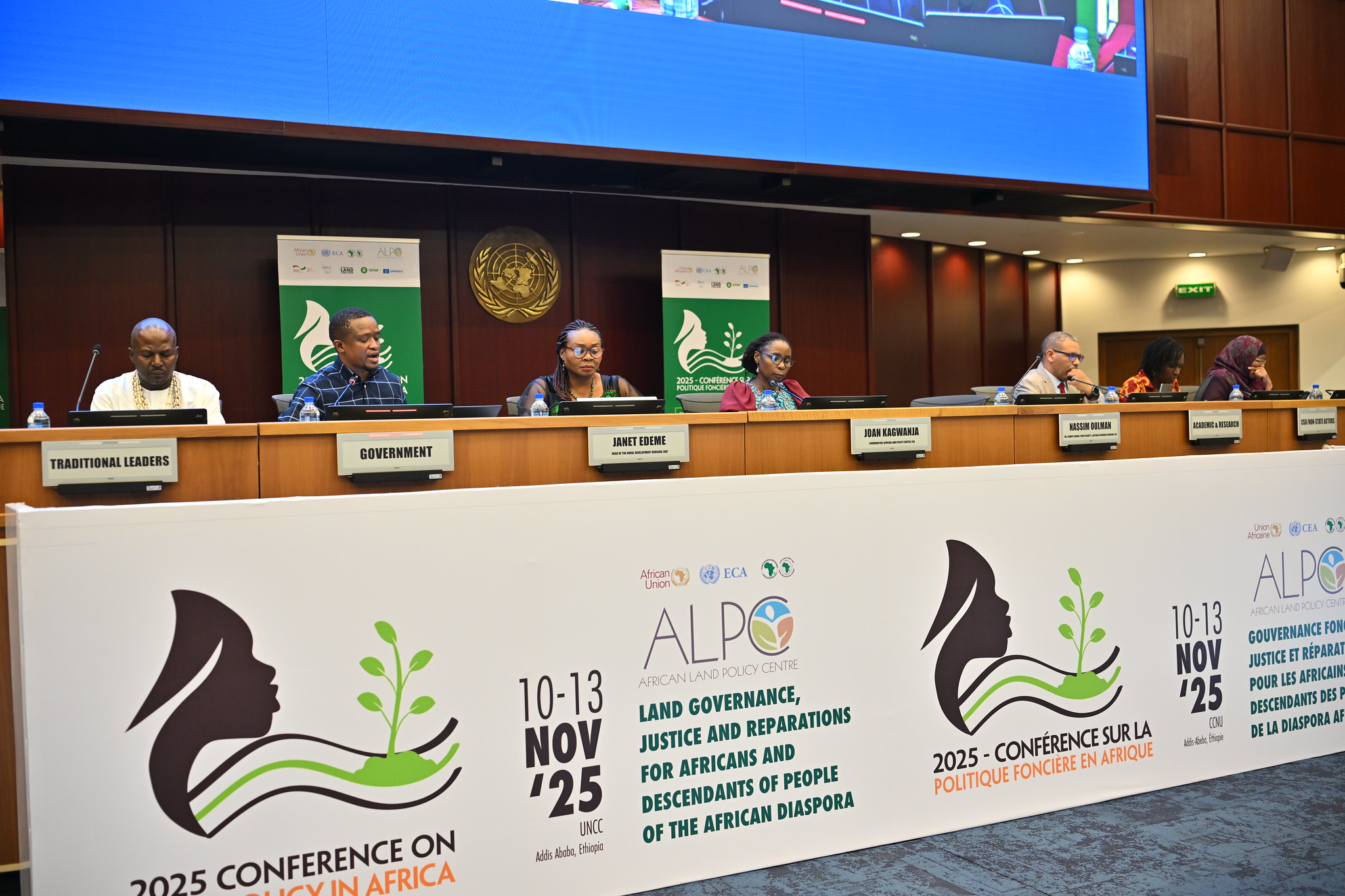 Panelists during a plenary session at the CLPA. Photo courtesy: CLPA.
Looking Ahead
CLPA Addis Ababa did not pretend to resolve Africa’s land question in one sweep. Instead, it clarified the landscape: the historical burdens that still shape conflict, the modern pressures redefining land relations, the fragile alignment between customary and statutory institutions, and the risks embedded in emerging investment and climate trends.
For RECONCILE, the conversations in Addis served as a prompt to sharpen its focus. The organisation will continue strengthening evidence generation, particularly through its work with the Land Matrix Initiative, and deepen its engagement with communities and county institutions on practical governance reforms. It will also sustain its advocacy around transparent land processes, especially where climate, conservation, and large-scale investments intersect with local rights.
If the ideas debated in Addis take root, anchored in history, informed by data, aligned with community realities, Africa may finally begin shaping a land governance system capable of honouring its past while preparing wisely for its future. RECONCILE intends to remain part of that work: steadily, constructively, and with an eye on the long term.
The conference did not offer certainty. It offered clarity. And on a subject as complex and consequential as land, clarity is often where real change quietly begins.