Indigenous Knowledge and the Governance of Kenya’s Rangelands Cultural Heritage as Evidence for Pastoral Policy
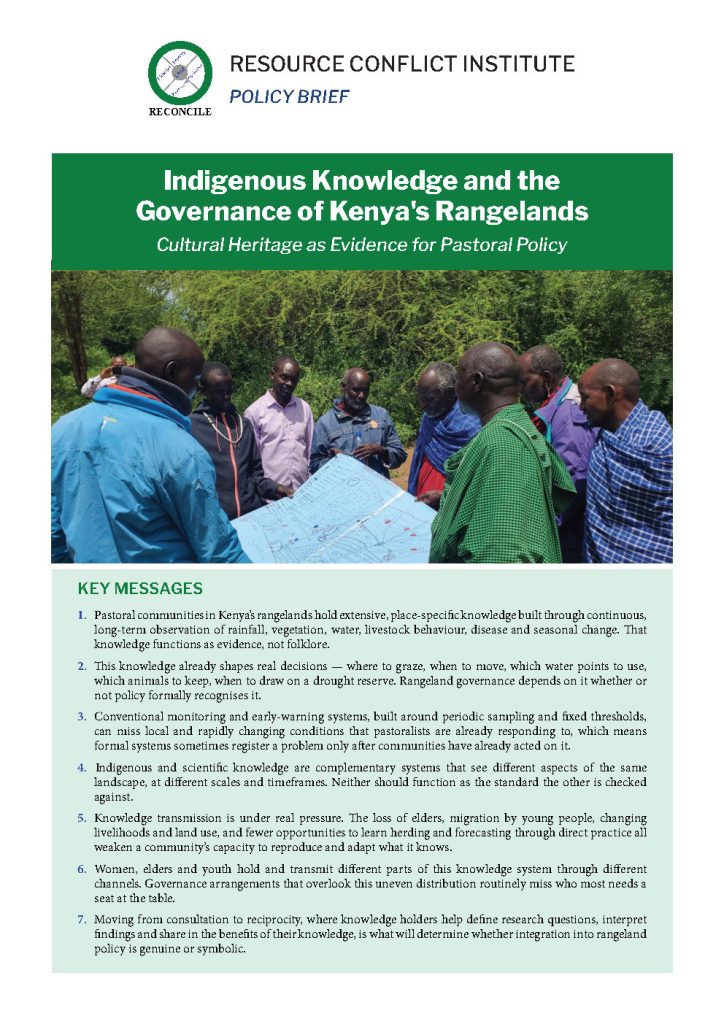
Indigenous Knowledge and the Governance of Kenya’s Rangelands Cultural Heritage as Evidence for Pastoral Policy
Key Messages
- Pastoral communities in Kenya’s rangelands hold extensive, place-specific knowledge built through continuous,long-term observation of rainfall, vegetation, water, livestock behaviour, disease and seasonal change. That knowledge functions as evidence, not folklore.
- This knowledge already shapes real decisions — where to graze, when to move, which water points to use,which animals to keep, when to draw on a drought reserve. Rangeland governance depends on it whether or not policy formally recognises it.
- Conventional monitoring and early-warning systems, built around periodic sampling and fixed thresholds,can miss local and rapidly changing conditions that pastoralists are already responding to, which means formal systems sometimes register a problem only after communities have already acted on it.
- Indigenous and scientific knowledge are complementary systems that see different aspects of the same landscape, at different scales and timeframes. Neither should function as the standard the other is checked against.
- Knowledge transmission is under real pressure. The loss of elders, migration by young people, changing livelihoods and land use, and fewer opportunities to learn herding and forecasting through direct practice all weaken a community’s capacity to reproduce and adapt what it knows.
- Women, elders and youth hold and transmit different parts of this knowledge system through different channels. Governance arrangements that overlook this uneven distribution routinely miss who most needs a seat at the table.
- Moving from consultation to reciprocity, where knowledge holders help define research questions, interpret findings and share in the benefits of their knowledge, is what will determine whether integration into rangeland policy is genuine or symbolic.